
What's on your restaurant equipment list? If you're new to running a commercial kitchen, you'll find that there's always something that you'll need to add. We're going to help you create a list that is as thorough as possible, and you can sift through it to pick and choose which items you'll need for your eatery.
Items to Add to Your Must-have List from the Restaurant Equipment Store
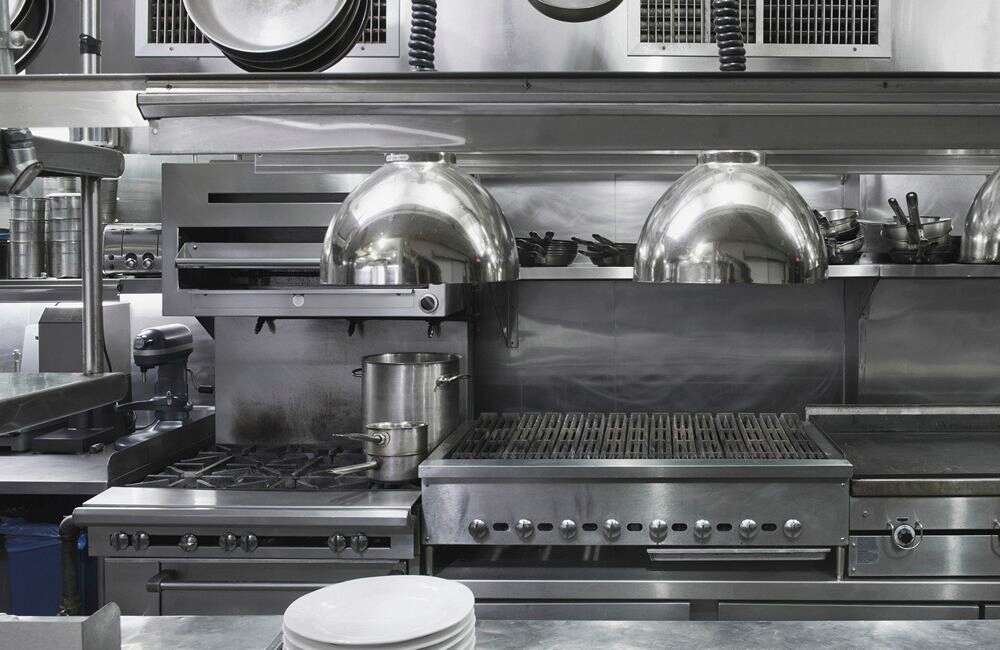
Your commercial kitchen equipment list should include some - if not all - of the items below:
Cooking Equipment and Appliances
Large equipment and appliances are the most expensive equipment for restaurants. You may or may not need the following:
- Ranges: Your range will help you do everything, from providing heat for sauteeing to cooking rice and simmering sauces.
- Ovens: Large commercial ovens are available for baking, broiling, and roasting. You'll also find combo ovens, conveyor ovens for large operations, and pizza ovens.
- Griddles: The top choice for diners, breakfast or burgers, griddles offer large cooking surfaces that are perfect for cooking everything from eggs to pancakes.
- Grills: If you own a BBQ-focused restaurant, outdoor grills may be a good option for you.
- Microwave: Sometimes, your chef will need to reheat items quickly, defrost items fast or rapidly melt butter. Microwaves are perfectly suited for this role.
Once you have these basic equipment and appliances on your list, you can move on to your "storage" equipment.
Refrigerators, Freezers and Storage
Your ingredients must be stored properly to reduce waste and maintain the highest safety storage standards. A few options in "storage" include:
Refrigerators and Freezers
Multiple refrigerator options are available, and your kitchen design and size will help you select the right choice. Options include:
- Blast chillers, which are rapid cooling units that are perfect for cooling dishes that just came out of the oven.
- Reach-in refrigerators, which are ideal for small- to medium-sized kitchens and will hold ingredients that you need to quickly and easily access.
- Walk-in coolers, which are more common in larger kitchens that have large quantities of perishable ingredients.
- Under-counter units that fit neatly in small diners and restaurants.
If you need more freezer options, you'll find plenty of commercial freezers in our inventory, including top chest freezers, two- and three-door reach-in freezers, large freezers on wheels and so much more.
Others
Your fridge and freezer space needs proper organization to make it functional for your line prep and chefs. Consider adding:
- Mobile storage racks
- Wire shelving
- Other organizational items
Dishwashers and Sanitation Equipment
Every food service establishment, no matter the size or type, must have dishwashers and sanitation equipment. Along with keeping your kitchen running smoothly and efficiently, sanitation equipment will help prevent health issues and ensure you're in compliance with regulations.
Make sure your kitchen is outfitted with:
- Commercial dishwashers. For high-volume establishments, conveyor models are ideal and can process large amounts of dishes continuously. Smaller establishments may only need under-counter models. Door-type dishwashers are great for medium and large restaurants that are short on space. When choosing a model, consider its cycle speed, energy efficiency, and maintenance requirements.
- Sinks and faucets for hand washing, dish sanitization and food prep.
Beverage Machines
Whether you run a coffee shop or a fine-dining restaurant, you'll need to invest in beverage equipment. After all, customers will expect to be served something to drink along with their meals.
Plus, beverages are a significant source of revenue for restaurants, so offering a wide selection will help you meet customer demand while fueling your growth.
Depending on your menu, you may want to purchase:
- Coffee machines, such as espresso or drip coffee makers
- Juicers if you plan to offer fresh juice with breakfast or as healthy beverage options with your meals
- Ice machines to ensure drinks are served at the right temperature and to improve your presentation
- Cold beverage dispensers for soda, lemonade, iced tea and other cold beverages
- Blenders if you plan to offer smoothies or mixed drinks
Additional Items to Consider
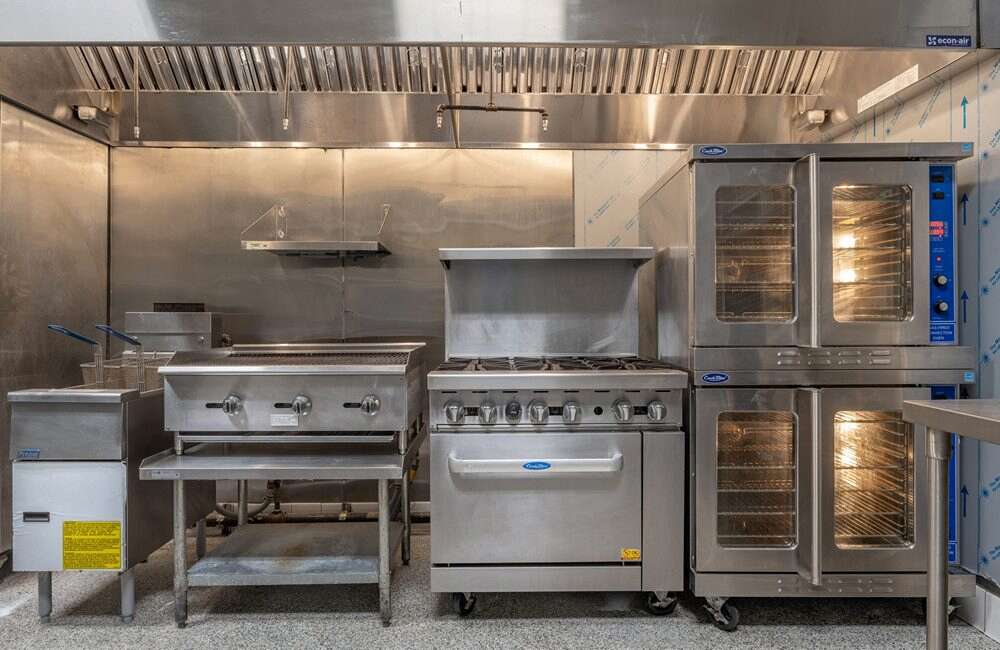
Along with all of the items above, there are a few additional equipment used in restaurant kitchens that you may want to consider, such as:
Mixers and Food Processors
Mixers and food processors streamline food prep and help you maintain an efficient kitchen. For mixers, you'll find both countertop and floor models available.
- Floor mixers are best suited for high-volume mixing. If you need to prepare large batches of batter or dough or if you run a bakery, a floor mixer may be the ideal option for you.
- Countertop mixers are more compact and best suited for lighter tasks.
As for food processors, you'll find two main types for commercial kitchens:
- Batch bowl, which is ideal for prepping small batches of vegetables or sauces.
- Continuous feed, which allows for a continuous input of ingredients for high-volume food prep.
Fryers and Charbroilers
If your menu includes fried or grilled items, you'll need to invest in fryers and charbroilers.
- Commercial fryers allow for high-volume frying and come in both gas and electric variations. Although gas allows for faster recovery and more efficient frying, electric models are easier to maintain.
- Charbroilers deliver high-heat grilling to create that smoky flavor customers love.
Slicers
Sharp and reliable slicers will save your staff time and frustration when prepping ingredients. There are several options to choose from, including:
- Automatic slicers, which completely automate the slicing process for even greater efficiency. These models can be used to slice deli meat, vegetables, cheese and more.
- Manual slicers, which are best suited for smaller restaurants or cafes. They offer more precision and control, but they still require manual labor to operate.
- Mandoline slicers, which are typically used for slicing garnishes and salad ingredients. These models deliver uniform slices, making them best for when presentation is of the utmost importance.
When shopping for slicers, consider the model's safety features. Safety guards and an ergonomic design can reduce the risk of injury.
These are some of the most important items to add to your restaurant equipment supply list. You may find that you also need specialty equipment to prepare certain dishes, but the items above are some of the most common and useful ones you'll find in any restaurant kitchen.