
Catering services are growing at a rate of 7.7%, and this trend is expected to continue through 2030. In the United States, catering brings in over $60 billion in revenue, but it’s also rife with food safety guidelines that you must follow.
If food makes guests sick, you risk losing your food safety certificate - on top of customers .
But it is more challenging to follow food handling guidelines when you’re off-site. You’re not in your kitchen and in control of every little detail, such as your storage equipment and prep station locations.
Intentional actions on your behalf will allow you to maintain food safety at profitable off-site events. We’ll explore a few of the ways your eatery can focus on food safety procedures to reduce the risk of spoilage or sickness.
7 Ways to Increase Your Catering Food Safety
1. Start With Your Transport Safety
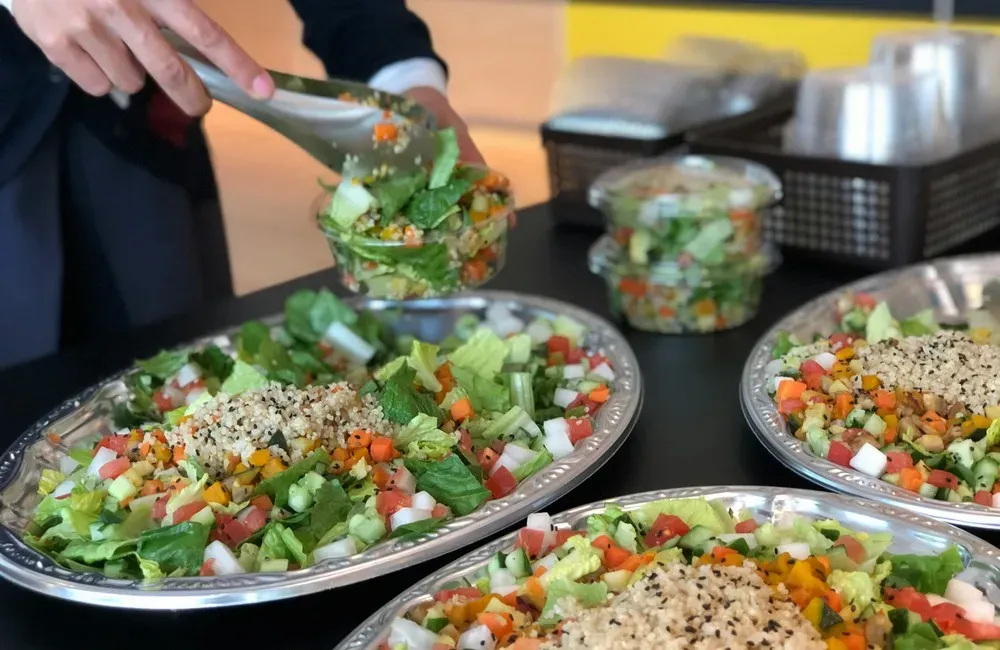
Transportation is often the weak link in food handling. Your chefs make an amazing meal, but once it’s out of their hands and on its way to the event, that’s when safety issues become most apparent.
A few food safety concerns during transport are:
- Contamination can occur
- Temperatures rise suddenly, spoiling the food
- Food contents spill into one another
You have a few ways to deal with these issues, starting with the containers that you use. Secure, non-spill containers prevent the last point on the list, while proper insulation stops the first two points from occurring.
Add in temperature monitors and you have food that is kept at safe temperatures and arrives piping hot (or cold) at the event.
You should invest in ice baths and warming trays for even more control. But even with all of these measures in place, it’s good practice that food quality and temperatures are assessed during the unloading process.
2. Create Allergen and Spoilage Labels
Your food arrives safely, but that’s not the only thing you need to be concerned about. What happens if you have a new employee and they don’t know that a certain dish has peanuts in it, so they serve it without warning?
It’s a major liability and health hazard risk.
Rectify this issue with the help of proper labeling . Provide labels to your transport and catering team that include:
- Spoilage labels on food trays
- Allergen labels, such as “caution, made with peanuts”
Obvious, easy-to-see labels are a great measure to take and one that is worth extending into your kitchen, too. Create a labeling habit in your restaurant and you’ll notice food safety instantly rises as a result.
3. Provide Prep Station Sanitization
Clean equipment and proper sanitization are the bare minimum that you should be doing to increase your food safety. You need:
- Clean equipment
- Clean dishware
- Handwashing stations
In the event that you’ll be cooking on-site at the catering event, you must have separate stations for raw and cooked foods. Your team should be accustomed to this dual station setup, but remember that they’ll operate in a much smaller space.
Assist your catering team in this area by providing clear signage.
4. Prepare for Emergencies
People never imagine that the worst can happen . An event might have its own water and electricity source, but that doesn’t mean they’ll work properly during the event. We don’t know when emergencies can happen, but it’s still up to you to navigate these difficult times.
Train employees on what to do if:
- Power outages occur
- Equipment fails
- Food temperatures rise
Cold foods are a major concern in this area because they often need to be in the fridge or freezer. Insulated containers and an ice tray can keep these items cool for the duration of the event so that they don’t spoil.
Catering managers must be diligent if the power or water goes out, monitoring the situation the entire time. If the manager believes that certain dishes are no longer safe to consume, they need the authority to remove them from the table.
Managers must also work in tandem with restaurant staff to prevent potential food hazards during emergencies.
5. Focus on Vendor Trust
Vendors play a major role in your success catering. You might be responsible for most of the food, but prepackaged items may also be served. Work with vendors who have a good reputation in the industry and can guarantee:
- Quality ingredients
- Quality prepackaged foods
Additionally, if the catering menu requires certain ingredients that you don’t have in-house, you will fallback to the relationship with your vendor.
Explain your needs to your suppliers and, if they’re good, they’ll do their best to help you fulfill them.
6. Invest in Food Safety Training
Work on obtaining a food handling permit that you’re proud of holding. Why? A permit shows that you understand the rules, but it’s just the first line of defense in your overall food safety. It’s up to you to devise:
- Courses for your team for off-site catering
- Training that all new employees must follow
- Meetings that your managers host prior to major events
Your staff likely has generalized knowledge of food safety, but this is often not deep enough for today’s restaurant safety requirements. Provide the training and resources necessary to maximize food safety at catering events and give your team the confidence they need for every event to be a success.
If you’re going to offer catering, this single step is the most important one to take.
7. Plan Your Menus Properly
Sensitive foods that go bad rapidly without just the right conditions are not your best bet when catering. You’re also dealing with the off-site venue, which may not have the same equipment as you do in your kitchen.
Ideally, your menu should reflect the venue the event is held at and be “unique” to the location.
Why?
You may need additional refrigeration units or lack certain spaces for some dishes. Work with the event manager to help you prepare for the event in the best way possible, starting with your menu.
Create a culture within your restaurant focused on food safety procedures. When these processes become second nature, your entire operation benefits. Safety increases on-site, when you’re in control of all aspects of your business, and off-site at profitable catering events.