
Running a fine dining restaurant requires you to create a fine dining experience that is unforgettable for all of the right reasons. If you fail on etiquette, it will impact your guests negatively.
What is Fine Dining?
You may experience different service at each luxury restaurant you frequent. Rules and traditions will dictate how the eatery does everything, from creating the right atmosphere to serving food.
Your high end restaurant may offer service that falls into one of the following categories:
- American: Dishes are served to the right of the guest. You may find some restaurants that still serve to the left, but you want to remain consistent above all else.
- Butler: A butler-style service allows you to serve yourself from a tray that the butler brings around. Think "high-end, catered events."
- English: Private dining often offers an English-style of fine dining. Servers serve each guest with a large platter of food and the host is the first person to be served.
- French: Lavish and upscale, French fine dining is either in a banquet style or cart-type service. You'll serve guests on the right side, but if it's a banquet service, guests must be served on the right. Dishes are prepared by the table.
- Chinese: In traditional Chinese dining, dishes are shared communally. A basic place setting includes a small teacup, a large plate with a small rice bowl, chopsticks on the right, and a soup spoon. Formal dinners have a specific seating order based on seniority and hierarchy, with guests seated according to their status and relationship with the host.
With all of these points in mind and now that you understand whether you need to serve from left or right, it's time to focus on the finer points of fine dining etiquette.
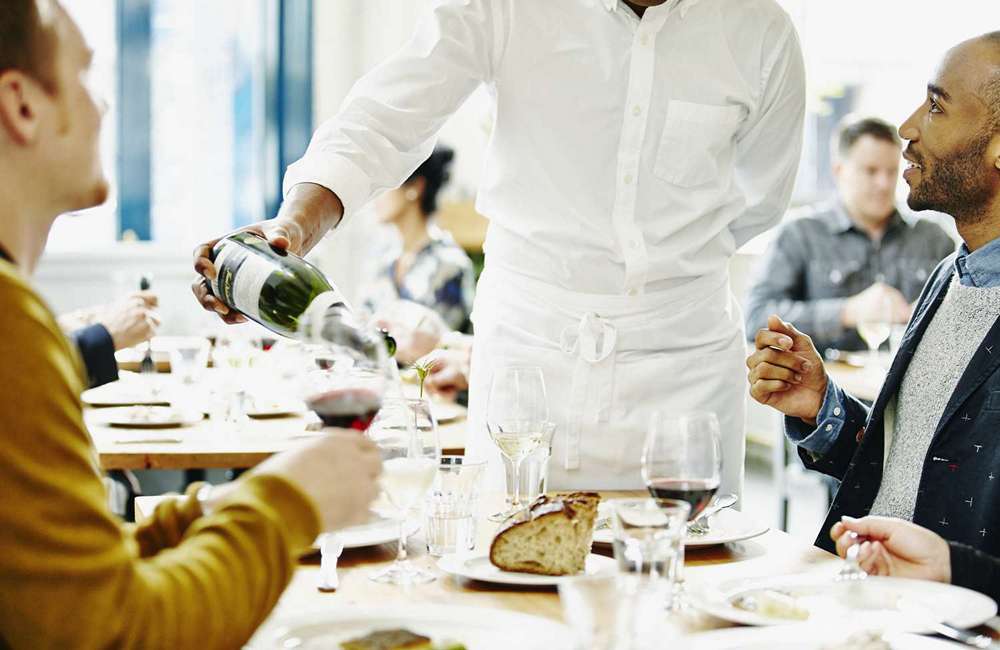
7 Etiquette Tips for a Fine Dining Restaurant
If you want to run a successful fine dining restaurant, you have to focus on more than just which side of the guests you need to serve. The following tips can help you create an unforgettable experience for all of your guests.
1. Ensure the Dining Room is in Order Before Service
First, your dining room must be in order before the service. If you have a room that is in disarray, it will negatively affect your entire service. You should:
- Inspect all tableware for chips, breakage and cleanliness.
- All dining tables should be inspected, wiped down and in good working order.
- Lighting, such as candles or mood lighting, should be set, too.
2. Set the Table Properly
Formal table settings should be set before guests arrive. Linens should be freshly washed and wrinkle-free. Depending on how many courses will be served, each setting may require up to twenty pieces.
Here are some tips to keep in mind:
- Use symmetry to keep the table balanced.
- Always hold glassware and flatware by the stem to reduce the appearance of fingerprints.
- Knives and spoons should always be placed on the right and forks on the left.
3. Anticipate Guest Needs While Remaining Unobtrusive
In a fine dining restaurant, servers should anticipate the needs of guests while remaining unobtrusive. Servers should be observant and detail-oriented to provide guests with the best possible experience.
Here are a few tips:
- As guests are being seated, servers should present the menu and wine list.
- Once everyone is comfortable, servers can describe the evening's specials.
- Servers should read the room and match the pace of their guests throughout the service.
After orders are placed, servers should also be prepared to bring additional tableware if needed.
4. Understand Resting Cutlery Etiquette
Resting cutlery etiquette allows guests to communicate with servers without saying a word. The positioning of the cutlery can signal their needs.
Servers should understand this etiquette.
- Knife and fork in a cross shape: Signals that the guest is ready for the next dish.
- Knife and fork placed in an inverted V shape: Lets the server know that they are getting up from the table but do not wish to have their plate removed.
- Knife and fork placed in a horizontal position: Signals that the food was excellent.
- Knife and fork side by side in a vertical position: Lets the server know that the guest is finished with the meal.
- Knife placed inside the tines of the fork in an inverted V position: Signals that the guest is unhappy with the food.
These simple cutlery positions communicate with servers and ensure their needs are met without having to interrupt the experience or conversation.
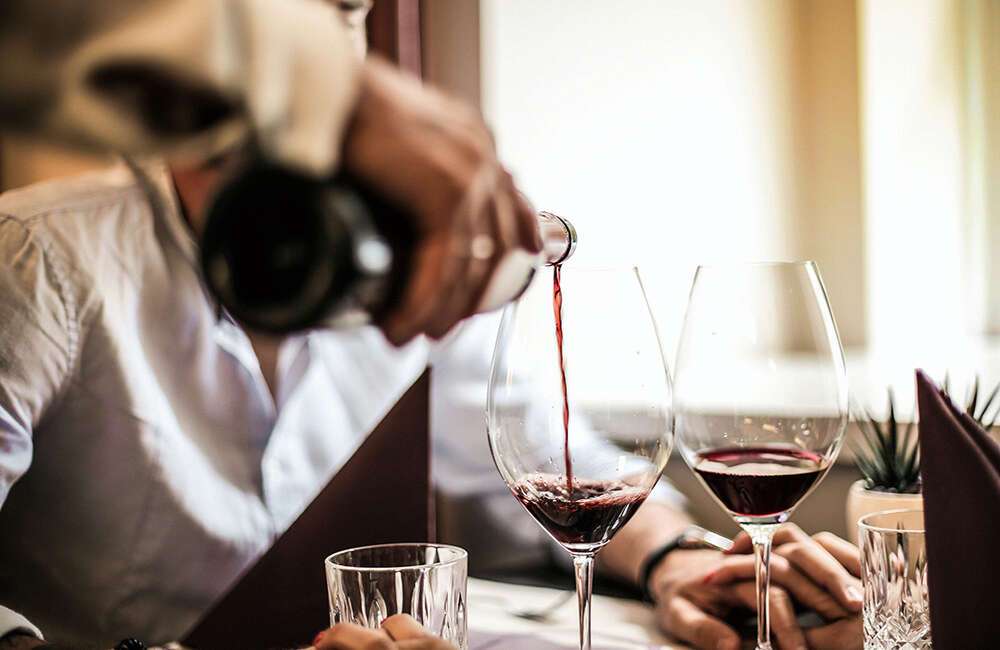
5. Master the Art of Wine Service
Wine service is typically performed at the table in a fine dining setting. Ensure that your servers know how to open and pour wine properly.
- Servers should know how to use a wine key to open bottles swiftly.
- The wine bottle should be presented to guests to confirm it is the correct wine.
- A small sample of the wine should be poured for the guest who ordered the bottle.
- Once the wine is approved, pouring should begin clockwise around the table.
- Wine glasses should never be touched while pouring.
If guests signal that they do not wish to have any wine, their glasses should swiftly be removed at the end of the service.
6. Know When and How to Clear the Table
The way in which servers clear the table is just as important as the service itself. Cluttered tables are distracting to guests and can create a negative experience.
Knowing when and how to clear the table is essential.
- Wait until all guests have finished.
- When removing plates, ensure that any used flatware is also cleared.
- Remove all condiments that will not be used during the next course.
- Always clear dishes from the guest's right side.
- Never stack dishes. Instead, remove each plate individually and stack it on a tray that is out of direct sight.
- De-crumb the table between courses.
7. Follow the Rules for Grooming and Behavior
A server's behavior and grooming must be on point in a fine dining setting. Whenever in view of guests, a fine dining server should conduct themselves in a professional manner.
As a general rule of thumb, servers should:
- Ensure their uniforms are well-fitted, spotless and neatly pressed.
- Style their hair neatly and away from the face.
- Avoid wearing cologne/perfume or jewelry during the service.
- Exhibit proper posture.
- Avoid engaging in informal conversations while near guests.
- Avoid touching, pointing at or gesturing towards a guest.
- Avoid eating and drinking while in view of guests.
Fine dining service is all about professionalism and poise. Servers should follow these rules to ensure guests have an impeccable experience.
Conclusion
If you run a high-end restaurant, it's important to ensure that you're providing guests with the level of service and experience they expect. Ensure your team is following these etiquette tips and always putting their best foot forward when serving guests.