
Automation is everywhere. Businesses are trying to cut back on costs and use technology to streamline certain roles in their business. But can you automate customer service in a restaurant?
For many people, going out to eat is as much about good-tasting food as it is about socializing and talking to employees – including customer service. Talking to a real person is one of the difficulties when trying to automate restaurant tasks.
Patrons want to have human-to-human communication, but that doesn’t mean that behaviors cannot change. Even with automation becoming more popular, you must weigh the risks and benefits for yourself to judge whether it’s a good choice for your eatery.
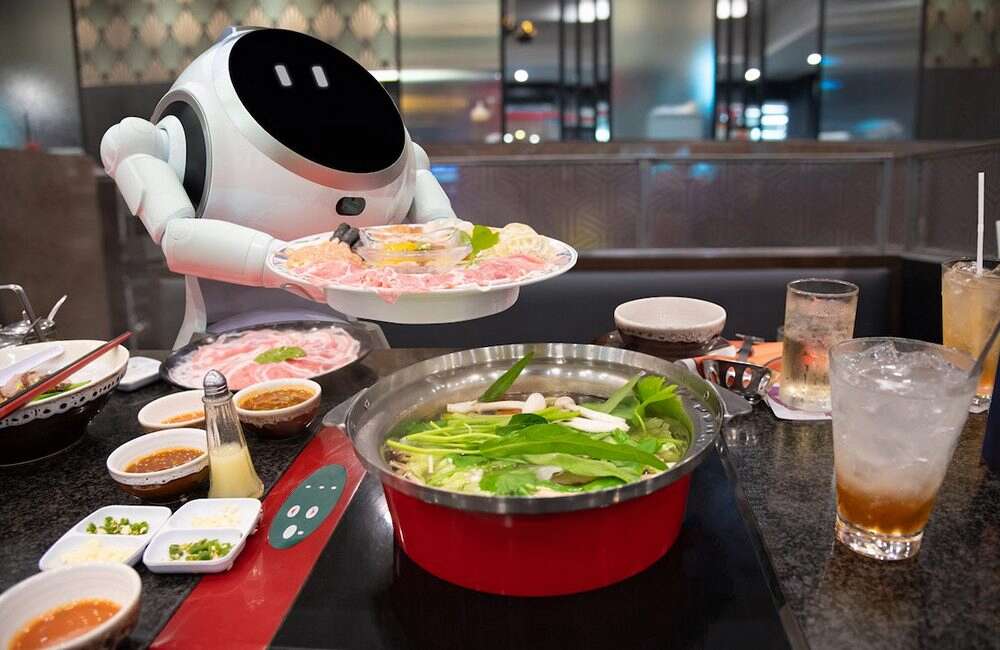
The Risks and Benefits of Automating a Restaurant
Risk assessments are a part of business and something that you should perform when making any changes to your operations.
The Risks
Automation has a lot of perks and the potential to save you money in the process. However, if you’ve built a strong customer base, you also risk the following:
Loss of the Small, Personal Feel
Any customer-facing tasks that you automate will cause your business to lose its personal feel. For example, if you automate a back-of-office task, the largest impact will be on your employees and can be handled internally.
But what if you run a family-owned eatery and are known for:
- Greeting guests by name?
- Making small talk with patrons?
- Being a friendly, outgoing person?
If you have personal kiosks and digital systems that take this personal service away, it may turn some customers away. Customers may be able to see the soup of the day and prices, but they’ll miss talking to a waitress, having a laugh and the human-to-human contact that they’re accustomed to because it’s been the norm for so long.
Complex Customer and Staff Issues
If a customer has an issue and asks a staff member to correct it, they can ask more questions and find a solution for you. Automation can miss a lot of the critical issues that customers have, and when AI doesn’t fix the issue, it can:
- Confuse staff
- Lead to irate customers
Restaurants must be prepared to correct complex customer and staff issues.
Risk of Errors and Unhappy Customers
Finally, every time you introduce new technology into your business, there’s a major learning curve and bumps in the road that you’ll need to overcome. Customers can be unforgiving, especially if they’re first-time visitors.
The Benefits
Wait, is all automation bad? Absolutely not. There are a lot of benefits to automation, which is why many restaurant owners are trying to implement some form of it in their business. Some perks include:
Save Money
Money is the main motivator for automation because you can:
- Increase output
- Reduce employee hours
You can save money on expenses by using automation in your eatery, but you will need upfront capital to:
- Put automation systems in place
- Test the systems that you have in place
Over time and with the right refinement, you can save money with automation.
Boost Efficiency
Initial issues with automation can be resolved, and when they are, there should be an increase in overall efficiency. A restaurant’s efficiency increase can mean:
- Leaner staff counts
- Increase in customers served
Improve Accuracy
If the right parameters are inputted into automated systems, they’ll be highly accurate and reduce the risk of errors. In fact, 65% of restaurant goers state that they would visit a restaurant more often if they had a self-serve kiosk.
Why?
Because the person can order faster and will not have to worry about their order being wrong. So, there is certainly room for a level of automation in your business, but you must be ready for it.
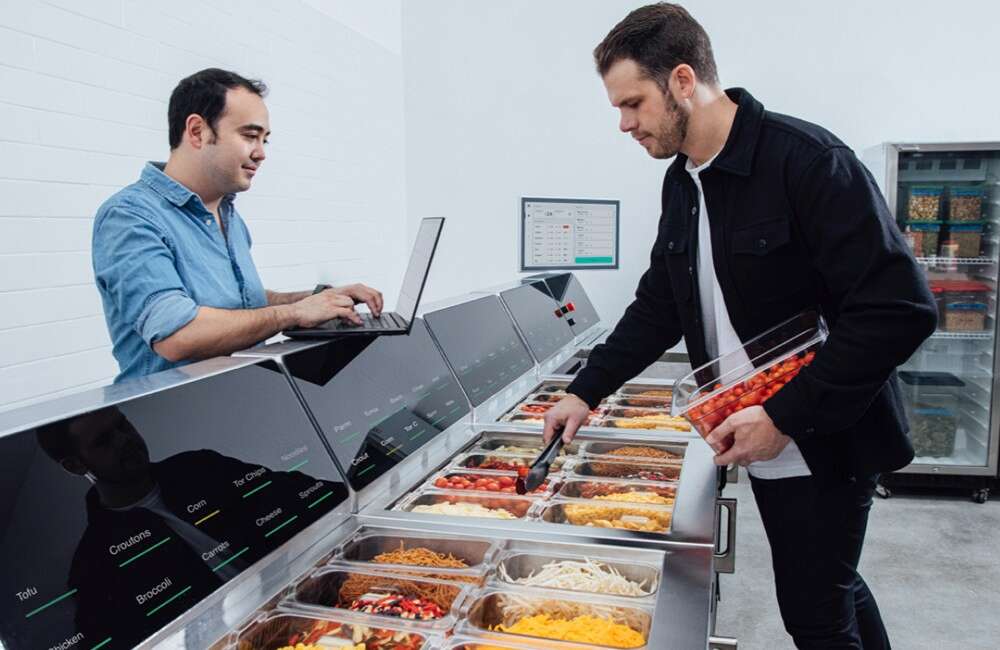
Are Restaurants Ready to Automate Customer Service?
Automation can reduce your employee count, but are you ready to automate the customer service experience? Do you want to automate it?
If you’re the “face of the business” and people come in because of the warm greeting that you give them and the friendly service, you can lose a lot of business by making the switch. Instead, try to automate other areas:
- Some food prep
- Back-of-house operations
Even large chain restaurants are struggling to automate customer service because it can lead to bad reviews and the loss of customers if there are issues.
Customer service is one of the experiences that patrons have that comes with the largest risks.
How To Automate Customer Service
Adding customer service automation requires you to:
- Demo products
- Compare and contrast options
You'll also need to:
- Slowly implement the automation
- Test the automated systems
- Balance human and automated customer service
The system should allow you to enter your own text and prompts for customers to go through. When entering these prompts, you must be as thorough as possible to reduce customer friction.
Additionally, you’ll want your workers to:
- Sit down and test systems
- Write down anything that’s confusing
- Make adjustments to the system
- Retest
If you allow for a lengthy training period, slowly implement automated customer service and go through multiple test runs, you’ll be better prepared to automate the customer service experience.
You can try to automate customer service in a few crucial ways:
- Self-service kiosks
- Chatbots
- Mobile ordering apps
- Table reservations
- Tabletop ordering/payment systems
While you’re at it, be sure to have a feedback system in place to help identify and rectify customer issues as quickly as possible.
How to Automate Restaurant Services
Automating your restaurant’s services all at once will confuse and frustrate your regulars. Instead, incremental adoption of automation can reduce the strain on your customers and staff.
For example, automate one small area of operations before proceeding to another area.
You can begin to automate:
- Inventory management
- Reservations
- Ordering
- Payroll
- Cost analysis
- Payment systems
- Mobile ordering
Some larger chains have robots to flip burgers and automated coffee machines. If you want to begin using automation, focusing on the back-of-house first will allow you to test new technology with less concern compared to customer-facing automation.
Automation vs human interaction in the restaurant industry is being slowly tested to learn how viable it is in practice. However, you can begin with small changes, such as adding self-service kiosks or tabletop ordering systems to certain tables to see how customers adapt to automation first-hand.