
When customers dine at your restaurant or order takeaway, they expect their food to be served hot. Maintaining the perfect temperature is key for both food safety reasons and to enhance the customer experience. Investing in a quality food warmer for restaurant use will allow you to keep your dishes at the right temperature until they're ready to be served.
But which model is right for your establishment? We're going to review five of the top models and share what to look for when choosing a unit.
5 Restaurant Food Warmer Reviews
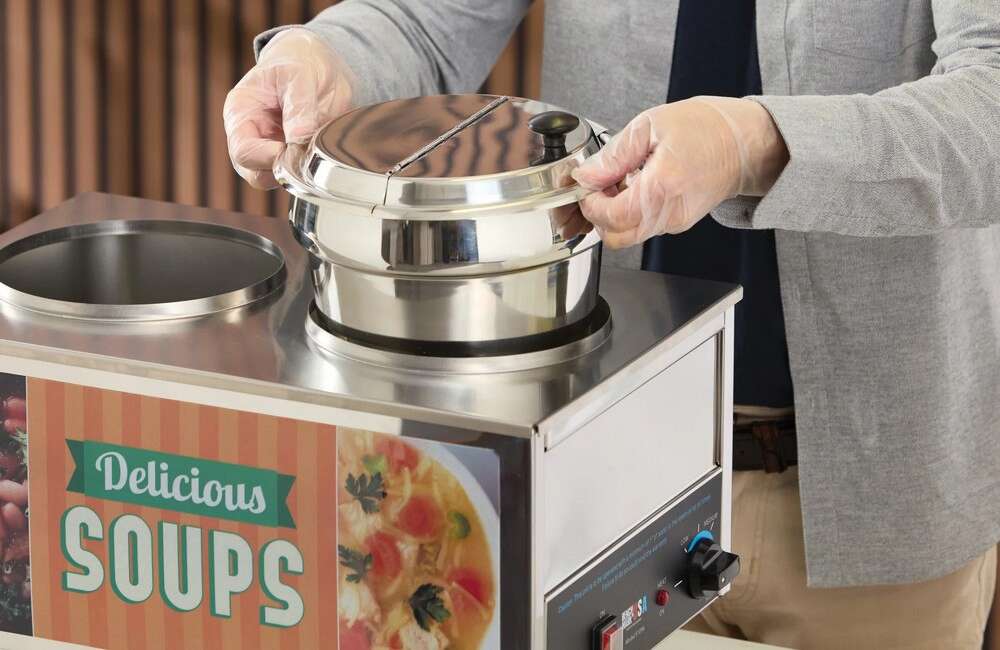
1. Nemco 6060A
The Nemco 6060A is a stainless steel food heater that's durable and easy to maintain. Use it to keep food warm in the back of house or place it in your buffet line to serve more customers.
This steam table comes equipped with mix-and-match adapter plates for flexible serving options.
The extra-deep wells hold large pots and pans, and there's a built-in drain on the front of the unit for easy water disposal.
To maintain the ideal temperature, the unit has a bulb and capillary thermostat that's fully adjustable.
2. Nemco 6101A-ICL-220
If you're looking for a countertop model, Nemco's 6101A-ICL-220 has you covered. This 11-quart unit works well in front-of-house or back-of-house environments.
The temperature can be adjusted up to 212 degrees Fahrenheit, and with a weight of just 15 pounds, it's easy to move this unit as needed.
The heavy-duty stainless steel well ensures durability and an extended life. And with the "No Drip Rim," you never have to worry about spills and messes.
Every unit comes with an inset, cover and ladle.
3. Nemco 6120A-230
This 4-quart twin unit has a stainless steel finish and an adjustable temperature range up to 212 degrees Fahrenheit.
Like other Nemco units, this one comes with an inset, cover and ladle.
Dimensions for this unit are 10" L x 18.5" W x 10" H, so it's a compact option with a light weight of 13.5 lbs.
4. C.A.C. ELFW-1200
C.A.C.'s ELFW-1200 is one of the more popular stainless steel food warmers. Its larger size makes it more versatile than other warmers made for soup.
The 22.5" size makes it great for rice dishes, pasta and even meat. Its countertop design means it can be used in restaurants, hotels, buffets, catering and any other food service business.
This unit uses a water tank system, which ensures even heat distribution and makes clean-up a breeze.
Thanks to its compact design, the ELFW-1200 is ideal for small kitchens with limited counter space.
5. Prepline DW3
Prepline's DW3 is a freestanding food warming station with three drawers (sized 12"x 20"x 6"). Individual thermostatic temperature controls (from 80-220°F) ensure that your food stays at just the right temperature.
The built-in vent controls also allow for adjustable airflow to keep foods dry or moist as needed.
The unit also features 11-gauge stainless steel drawer slides for added durability and easy use.
Full heavy-duty stainless steel construction means that this unit will give you years of use with easy maintenance.
You can use this food warmer to keep vegetables, meats, breads and virtually any other type of food item fresh and hot until they're ready to be served.
What to Look for in a Restaurant Food Warmer
When choosing a commercial food warmer, there are several things to consider. Here's what to look for when comparing models.
Features that Meet Your Needs
A variety of different types of food warmers are available, each with its own purpose. Consider your needs and decide what type of warmer will work best in your kitchen.
The most common options are:
- Steam tables or food wells. These use wet heat to keep food warm. They're great for cafeterias and buffets.
- Dry heat warmers. These models use direct heat without water. Although they heat up faster and use less energy, they can cause some foods to dry out. They're better suited for bread and fried foods.
- Warming drawers. Models like these are great for holding items like cooked proteins, rolls or tortillas.
- Holding cabinets. These large, insulated units are best suited for high-volume operations. They're often used in the back of house to hold large trays of food for longer periods before serving.
Temperature Control and Safety
Food safety is the top priority, so temperature control must be considered when choosing a model.
Look for units with:
- Precise temperature controls. These are units with a thermostat that allows you to set an exact temperature rather than a model that has Low, Medium or High settings.
- The right temperature range. Make sure the warmer will consistently hold the food above 140 degrees Fahrenheit.
- Individual controls (if purchasing a multi-well unit). When there are multiple wells or drawers involved, it's best to have individual temperature controls to keep foods at the right temperature.
Size and Capacity
Along with temperature control and type, you should consider the size and capacity of your food warmer cart.
- How much space do you have in your kitchen? Will you need a countertop model or a large floor unit?
- How much volume do you average? Consider the volume of food you'll need to keep warm during your busiest service times.
- Is portability a concern? If you plan to use the warmer for catering or need to move it around the kitchen, make sure you choose a model that has sturdy casters.
Durability
Food warmers are an investment, whether you're purchasing a countertop model or a larger freestanding unit.
You want a model that will last for years.
Look for warmers made from stainless steel to achieve this goal. Stainless steel is corrosion-resistant, durable and easy to clean.
Should I Choose a Gas or Electric Warmer?
Food warmers are powered by either gas or electric. Each has its own advantages, but your kitchen setup will likely dictate which one you choose.
Gas food warmers:
- Cost less to run. Natural gas is often cheaper than electric.
- Deliver instant heat and allow for quick temperature adjustments.
- Offer reliable use. Even if there's an electrical power outage, you can continue using the unit.
But they also require a gas line installation and often require more maintenance.
Electric food warmers:
- Offer energy efficiency.
- Deliver consistent, even heating.
- Have an easy installation process.
But these units also have slower heat-up times, higher running costs and can be problematic if there's a power outage.
Final Thoughts
Food warmers hold your dishes at safe temperatures until they're ready to be served. But it's crucial to find a model that will meet your volume needs and ensure diners get the experience they expect.
Use this guide to choose the right unit for your eatery.